Where Are Home Prices Heading in 2026? A Look at the Future of the U.S. Housing Market

The U.S. housing market has entered a more complicated phase in 2026. The rapid price increases that characterized parts of the market earlier in the decade have slowed, but that does not mean home prices are falling everywhere. Instead, the market is becoming increasingly divided by location, affordability, inventory, and local economic conditions.
For homeowners, buyers, investors, and sellers, one question continues to dominate conversations:
Where are home prices headed next?
The answer is unlikely to be the same across the entire country.
Some markets may continue to experience moderate appreciation because of limited housing supply, while others may see flat prices or small declines as buyers become more sensitive to affordability. Understanding these differences is becoming more important than simply following the national housing index.
The Era of Rapid Home Appreciation Is Changing
The U.S. housing market experienced extraordinary price growth during the pandemic period. Extremely low mortgage rates, limited inventory, changing housing preferences, and strong demand pushed prices sharply higher across many markets.
That environment eventually became difficult to sustain.
As mortgage rates increased, monthly payments rose significantly. The purchasing power of buyers declined, and many households were forced to reconsider how much they could afford.
The result has been a gradual transition toward a slower and more sustainable housing market.
Home prices are still historically high in many areas, but annual appreciation is no longer occurring at the extraordinary pace seen during the earlier housing boom.
This change is important because a slower market does not necessarily mean a collapsing market.
In many cases, it simply means prices are moving at a more moderate pace.
Why Home Prices Are Not Expected to Behave the Same Everywhere
One of the biggest mistakes homeowners and investors can make is treating the U.S. housing market as one market.
Real estate is local.
Housing conditions can vary dramatically between states, cities, suburbs, and even neighboring communities.
A city experiencing strong population growth and limited construction may continue to see rising prices.
Another market with significant new construction, slower population growth, or weaker affordability may experience much slower appreciation.
Several factors can influence the direction of local home prices:
-
Housing inventory
-
Employment growth
-
Population changes
-
Household income
-
Mortgage rates
-
New construction
-
Property taxes
-
Insurance costs
-
Local zoning policies
-
School quality
-
Transportation access
-
Economic conditions
This is why buyers and sellers should pay close attention to neighborhood-level data rather than relying entirely on national forecasts.
Supply Will Remain One of the Biggest Drivers
Housing supply is likely to remain one of the most important factors influencing prices throughout 2026 and beyond.
The basic relationship is straightforward.
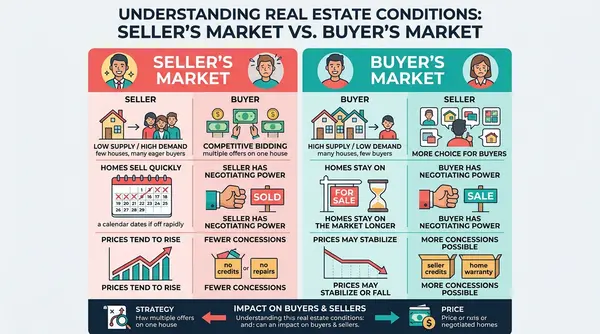
When demand is high and supply is limited, sellers generally have greater pricing power.
When supply increases faster than demand, buyers gain more negotiating leverage.
The U.S. has spent years dealing with a housing shortage in many markets. Construction has increased, but building enough homes to fully resolve supply constraints takes time.
Land availability, zoning regulations, labor shortages, construction costs, financing conditions, and permitting processes can all slow development.
Existing homeowners also play an important role.
Many homeowners are reluctant to sell because they have mortgage rates that are significantly lower than current rates. Selling could mean purchasing another property at a much higher borrowing cost.
This mortgage-rate lock-in effect can reduce the number of existing homes entering the market.
As a result, even when buyer demand weakens, limited inventory can prevent prices from falling sharply in some areas.
New Construction Could Change the Balance
New construction is becoming increasingly important in determining where buyers have choices.
Builders have responded to housing shortages by constructing more homes in many parts of the country.
New construction can provide an alternative for buyers who cannot find suitable existing properties.
It can also introduce competition for homeowners trying to sell older properties.
If a buyer can purchase a newly built home with modern features and builder incentives at a competitive price, an older property may need to offer better value to attract attention.
This does not necessarily hurt existing homeowners.
Well-maintained properties in established neighborhoods can still be highly desirable because of mature landscaping, established communities, better locations, and proximity to schools and amenities.
However, sellers may need to understand what they are competing against.
Affordability Could Limit Price Growth
Even if demand remains strong, affordability can put a ceiling on how quickly prices can rise.
A household's ability to purchase a home depends on more than the home's sticker price.
Mortgage rates determine borrowing costs, while income determines how much monthly payment a household can reasonably handle.
When home prices rise faster than wages, affordability deteriorates.
Eventually, some buyers are forced out of the market or must purchase smaller homes, move farther from employment centers, or delay buying.
This is one reason the housing market may experience slower price appreciation even when demand remains positive.
In 2026, affordability is expected to remain a major consideration for both consumers and policymakers.
Mortgage Rates Could Change the Market Quickly
Mortgage rates remain one of the biggest variables facing the housing market.
A meaningful decline in mortgage rates could unlock significant pent-up demand.
Many potential buyers have been waiting on the sidelines because today's monthly payments are too expensive.
If financing becomes more affordable, some of those buyers could return.
That could increase competition and potentially push prices higher in markets where inventory remains limited.
However, lower rates could also encourage existing homeowners to sell.
Homeowners who have been reluctant to move because of their current mortgage rate may become more comfortable listing their properties if the difference between their existing loan and a new loan becomes smaller.
This could increase supply.
Therefore, lower rates could simultaneously increase buyer demand and seller supply.
The final effect on prices would depend on which force becomes stronger in each local market.
Will Lower Mortgage Rates Cause Another Housing Boom?
A significant decline in mortgage rates could increase housing activity, but another pandemic-style boom is not guaranteed.
The conditions that created the earlier surge were unusual.
Mortgage rates reached exceptionally low levels, households accumulated savings, remote work changed housing preferences, and the number of homes available for sale was extremely limited.
Today's environment is different.
Borrowing costs remain higher, affordability is more constrained, and buyers are generally more cautious.
Even if mortgage rates decline, households may remain sensitive to overall economic conditions.
Instead of an explosive increase in prices, the more likely effect could be a gradual increase in transactions.
That would still represent an important improvement for the housing market.
Buyers May Have More Negotiating Power
The changing market environment is creating opportunities for buyers that were difficult to find during the peak of the housing boom.
In areas where inventory is rising, buyers may have more leverage when negotiating.
Possible negotiation points include:
-
Purchase price
-
Closing costs
-
Inspection repairs
-
Seller concessions
-
Mortgage-rate buydowns
-
Closing dates
-
Appliances and fixtures
-
Home warranties
However, negotiation power depends heavily on the property.
A desirable home in a competitive neighborhood may still receive multiple offers.
A property that has been sitting on the market for several weeks may provide significantly more negotiating room.
Buyers should therefore look beyond the asking price.
The listing history can provide valuable information about the seller's position.
Sellers Will Need to Price More Carefully
Sellers may face a more demanding market in 2026.
During the strongest years of the housing boom, sellers could sometimes price aggressively and still attract buyers.
That strategy is becoming riskier.
Overpricing can cause a property to sit on the market longer.
As days on market increase, buyers may begin to wonder why the property has not sold.
Price reductions can eventually become necessary.
The strongest approach is usually to establish a realistic price based on recent comparable sales and current competition.
Sellers should also understand that the market value of a property is not necessarily the same as its emotional value.
A homeowner may remember purchasing the property for a certain price or investing heavily in renovations.
Buyers, however, are primarily focused on current market value.
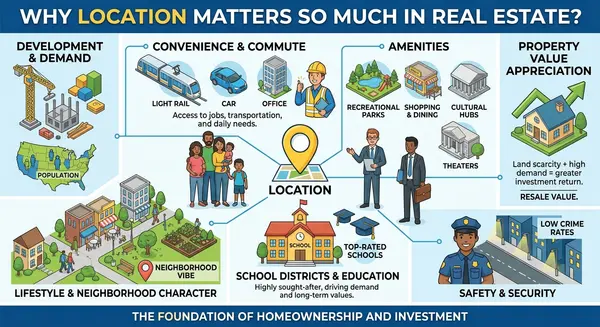
The Importance of Location Will Continue to Increase
Location has always mattered in real estate, but it may become even more important as the market becomes more selective.
When buyers have limited choices, they may compromise on location to secure a property.
When inventory improves, buyers can become more selective.
Properties close to employment centers, transportation, schools, shopping, parks, and entertainment may continue to attract strong demand.
Meanwhile, homes in locations with long commutes, limited services, or weaker local economies may need to compete more aggressively on price.
This creates opportunities for buyers who are willing to research neighborhoods carefully.
Sometimes the best investment is not the most expensive property in the fastest-growing city.
It may be an affordable property located in a neighborhood with strong fundamentals and room for future growth.
The Midwest and Northeast Could Continue to Stand Out
Recent housing trends have highlighted differences between regions.
Several Midwest and Northeast markets have maintained relatively strong price performance because of limited inventory and comparatively favorable affordability.
These regions may continue to attract buyers who are priced out of more expensive coastal markets.
However, regional trends should not be interpreted too broadly.
A strong state does not mean every city within that state will outperform.
Similarly, a slower state can contain individual neighborhoods with excellent long-term potential.
Investors should always examine local employment, population trends, inventory, rental demand, taxes, insurance, and development plans before making decisions.
Sun Belt Markets Face a Different Challenge
Several Sun Belt markets experienced substantial population growth and housing demand during the pandemic.
Cities in states such as Texas, Florida, Arizona, and other fast-growing regions attracted residents because of employment opportunities, lifestyle preferences, relative housing affordability, and migration.
But rapid construction has also increased housing supply in some of these markets.
When supply rises faster than demand, buyers gain more choices.
This can reduce the urgency to purchase and make it harder for sellers to achieve rapid price increases.
For buyers, however, this can create opportunities.
More inventory can mean greater selection, more negotiation, and potentially stronger incentives.
The key is identifying markets where increased supply is being balanced by sustainable population and employment growth.
Investors Should Look Beyond Appreciation
Investors should be particularly careful about relying solely on future home-price appreciation.
A property can appreciate while still producing weak investment returns if carrying costs are too high.
Investors should examine:
-
Purchase price
-
Expected rent
-
Vacancy
-
Property taxes
-
Insurance
-
Maintenance
-
Property management
-
Financing costs
-
Capital expenditures
-
Local rental regulations
-
Potential resale value
Cash flow and long-term appreciation should be evaluated together.
A market with slower price growth may still be attractive if rental demand is strong and acquisition prices are reasonable.
Likewise, a rapidly appreciating market may not be a good investment if prices have moved far beyond local rents and household incomes.
Could Home Prices Actually Fall?
Yes, home prices can fall in individual markets.
The important question is how large and widespread the decline would be.
A sharp nationwide decline generally requires a combination of major economic problems, rising unemployment, forced selling, excessive housing supply, or significant deterioration in credit conditions.
Today's housing market has some characteristics that make a severe nationwide collapse less straightforward.
Many existing homeowners have substantial equity, mortgage underwriting standards are different from those before the 2008 financial crisis, and a large portion of homeowners have fixed-rate mortgages.
However, this does not eliminate risk.
Local markets can still experience meaningful corrections.
Areas with excessive new construction, weak demand, affordability problems, or economic weakness may face greater pressure.
That is why local analysis matters.
What Could Drive Home Prices Higher?
Several factors could support continued price growth.
Limited Inventory
A shortage of desirable homes can keep competition strong.
Wage Growth
Higher household incomes can improve purchasing power.
Falling Mortgage Rates
Lower borrowing costs could bring more buyers into the market.
Population Growth
Migration into a region can increase housing demand.
Strong Employment
Growing job markets tend to support household formation and housing demand.
Limited Land
Markets with geographic or regulatory constraints on development can experience persistent supply shortages.
These factors can work together and create strong long-term housing markets.
What Could Push Prices Lower?
The opposite forces could create downward pressure.
Rising Unemployment
Job losses can reduce the number of households able to purchase homes.
Higher Mortgage Rates
Expensive financing reduces purchasing power.
Excess Inventory
Too many homes competing for too few buyers can pressure sellers to reduce prices.
Insurance and Tax Increases
Higher ownership costs can reduce what buyers are willing to pay.
Weak Local Economies
Declining employment or population can reduce housing demand.
Oversupply of New Construction
Large amounts of new housing can increase buyer choices and reduce seller leverage.
The interaction between these factors will determine individual market outcomes.
What Should Homeowners Do in 2026?
Homeowners should not make decisions based solely on predictions about national prices.
If you plan to remain in your home for many years, short-term price movements may have limited importance.
Instead, consider whether the property continues to meet your needs and whether your financial situation remains comfortable.
If you are considering selling, evaluate current comparable properties and understand how much competition exists in your neighborhood.
If you are considering an investment property, focus on income, expenses, and long-term fundamentals.
And if you are thinking about moving, compare the financial consequences of selling your current property with purchasing another one at today's financing costs.
What Should Buyers Watch for in the Coming Months?
Buyers should monitor several indicators throughout the remainder of 2026.
Mortgage rates: Changes can quickly affect affordability.
Inventory: Rising inventory may increase negotiating power.
Price reductions: A growing number of reductions can indicate that sellers are adjusting expectations.
Days on market: Longer marketing periods can signal a more balanced market.
New construction: Builder incentives can create opportunities.
Local employment: Strong job growth can support long-term demand.
Insurance costs: Higher premiums can materially affect affordability.
Looking at these indicators together is much more useful than following a single national statistic.
The Most Likely Direction of the Market
The U.S. housing market is unlikely to move in one dramatic direction.
A more realistic outlook is continued normalization.
Home prices may continue to rise modestly in many markets, while some areas remain flat or experience small declines.
Mortgage rates may remain an important constraint until borrowing costs become more manageable.
Inventory is likely to continue improving gradually, although shortages could persist in desirable neighborhoods.
The result could be a market where transactions slowly recover while price growth remains relatively controlled.
That would be a very different market from the extraordinary boom of the early 2020s.
Final Thoughts
Predicting exactly where U.S. home prices will be one year from now is impossible.
Real estate is influenced by too many variables, and local markets can behave very differently from national averages.
But the broader direction of the housing market is becoming clearer.
The future is likely to be shaped by affordability, inventory, mortgage rates, employment, and regional economic strength.
For buyers, that means opportunities may exist without requiring a major nationwide price decline.
For sellers, it means realistic pricing and strong property presentation will matter more.
For investors, it means local fundamentals should take priority over national headlines.
And for homeowners, it means there is no need to panic over every short-term change in home prices.
The U.S. housing market is not simply moving toward a boom or a crash.
It is evolving into a more balanced, selective, and locally driven market.
The biggest winners may not be those who perfectly predict the next move in home prices.
They may be the buyers, sellers, and investors who understand their local market, evaluate the numbers carefully, and make decisions based on long-term fundamentals rather than short-term speculation.
Categories
Recent Posts