2027 U.S. Home Price Predictions: Where Could Property Values Rise, Stabilize, or Cool?

One of the biggest questions facing the U.S. real estate market is what will happen to home prices in 2027.
After years of significant appreciation, followed by a period of higher mortgage rates and slower transaction activity, the housing market is entering a new phase. Buyers are becoming more selective, sellers are adjusting expectations, and local markets are moving at very different speeds.
For homeowners, the direction of prices matters because their property represents one of their largest financial assets. For buyers, it can determine whether waiting makes sense or whether purchasing sooner may be the better decision. For investors, price trends can influence both potential appreciation and overall returns.
At Onest Real Estate, our view is that 2027 is unlikely to produce one uniform national housing trend.
Instead, the U.S. housing market could become increasingly divided between markets where demand remains strong, markets that stabilize, and markets where affordability pressures create more resistance to price growth.
Rather than predicting a nationwide boom or crash, it is more useful to understand the factors that could determine where prices go next.
The National Housing Market May Experience Moderate Price Growth
The most likely scenario for 2027 is not another period of rapid nationwide appreciation.
Instead, home prices could continue rising at a slower and more sustainable pace.
Several housing forecasts currently point toward relatively modest national price appreciation in 2027. Some projections place growth around 2% to 3%, although forecasts vary depending on assumptions about mortgage rates, economic growth, inventory, and consumer demand.
That would represent a significant change from the rapid appreciation experienced in some parts of the country earlier in the decade.
Moderate appreciation would also suggest a market where buyers have more opportunities to negotiate while homeowners continue building equity gradually.
However, national averages can hide substantial regional differences.
Why National Home Price Predictions Can Be Misleading
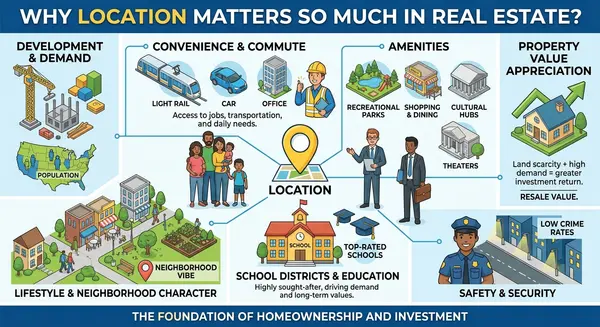
The United States does not have one single housing market.
Housing conditions can vary dramatically between states, cities, suburbs, and even individual neighborhoods.
For example, a community with:
-
Strong employment growth
-
Limited land
-
High household incomes
-
Low housing inventory
could experience stronger appreciation than a market where:
-
Construction is increasing rapidly
-
Population growth is slowing
-
Homes are expensive relative to local incomes
-
Inventory is abundant
This means a national prediction should be treated as a broad framework rather than a forecast for a specific property.
The question for homeowners and buyers should not simply be:
“Will U.S. home prices rise in 2027?”
It should be:
“What is likely to happen to home prices in my market?”
Northeast Markets Could Remain Relatively Resilient
Several Northeast housing markets have characteristics that could support property values.
Many established communities have limited land available for new construction.
At the same time, desirable locations can continue attracting buyers because of employment, transportation, established neighborhoods, schools, and amenities.
Markets with persistent supply shortages may therefore experience continued price support.
However, affordability could limit the speed of appreciation.
If buyers are already stretching their budgets, there may be less room for prices to increase rapidly.
The likely outcome in many established Northeast markets could therefore be moderate appreciation rather than dramatic growth.
Midwest Markets Could Attract More Attention
The Midwest may remain one of the more interesting regions to watch in 2027.
Many Midwestern communities offer lower home prices compared with some coastal markets.
If buyers continue searching for affordability, cities and suburbs with strong employment bases could attract additional demand.
Markets that combine:
-
Reasonable home prices
-
Job opportunities
-
Population stability or growth
-
Good infrastructure
-
Quality-of-life advantages
could perform particularly well.
However, not every Midwestern market will experience the same results.
Economic fundamentals at the city and neighborhood level will remain important.
Sun Belt Markets May Enter a More Selective Phase
The Sun Belt experienced enormous housing demand during the pandemic-era migration period.
Cities across states such as Texas, Florida, Arizona, Georgia, Tennessee, and North Carolina attracted households seeking jobs, lower taxes, warmer climates, and lifestyle changes.
That growth also encouraged substantial construction.
The result is that some Sun Belt markets now have significantly more housing inventory than they did several years ago.
This could create a more balanced market in 2027.
For buyers, additional inventory could mean more choices.
For sellers, increased competition could require more realistic pricing.
Some high-growth communities may continue performing well, but rapid appreciation should not be assumed simply because a market previously experienced strong growth.
Florida Could See Major Differences Between Markets
Florida is an excellent example of why broad regional predictions can be misleading.
The state continues to attract residents, retirees, investors, and businesses.
But housing conditions vary dramatically from one community to another.
Insurance costs have become an important consideration for homeowners in many areas.
Higher insurance expenses can affect affordability and therefore influence what buyers are willing to pay.
In some Florida markets, this could limit price growth even when underlying demand remains strong.
Properties with manageable insurance costs, desirable locations, and strong amenities could perform differently from properties facing significantly higher ownership expenses.
Texas Could Remain Attractive, But Supply Matters
Texas remains one of the country's major population and economic growth centers.
Cities such as Dallas-Fort Worth, Austin, Houston, and San Antonio have experienced substantial development.
However, Texas has also added a significant amount of housing.
That additional supply can help affordability but can also reduce the likelihood of rapid price increases.
For 2027, the strongest Texas markets may be those where job creation, population growth, and housing demand continue to keep pace with new construction.
Buyers may benefit from greater choice, while sellers may need to compete more aggressively on price and condition.
California Could Remain a High-Value, Supply-Constrained Market
California's housing market faces a different set of challenges.
High home prices and affordability concerns remain major barriers for buyers.
At the same time, many desirable California communities face significant constraints on housing construction.
This combination can support property values over the long term.
However, affordability limits how quickly prices can rise.
Some California markets could therefore experience relatively modest appreciation while remaining among the country's most expensive housing markets.
Mountain West Markets May Continue to Normalize
Several Mountain West markets experienced exceptional price growth during the pandemic period.
Remote work, migration, lifestyle preferences, and limited housing supply contributed to strong demand.
But as construction increased and affordability became more difficult, some of these markets began cooling.
By 2027, the market could become more balanced.
Buyers may have more choices.
Sellers may face greater competition.
And price growth could depend heavily on employment and population trends.
Housing Inventory Will Be One of the Biggest Price Drivers
Inventory could determine whether a market favors sellers or buyers.
When there are very few homes available, buyers compete for properties.
When there are many homes available, sellers must compete for buyers.
This basic relationship will continue influencing prices in 2027.
Markets with limited inventory could experience stronger price support.
Markets with substantial new construction could experience slower appreciation.
However, inventory alone does not determine prices.
Demand matters just as much.
Mortgage Rates Could Change the Price Equation
Mortgage rates will remain one of the most important variables.
If rates decline, buyers may gain additional purchasing power.
But lower rates could also bring more buyers into the market.
That creates a potential feedback loop.
Lower rates increase affordability.
More buyers increase demand.
Higher demand can put upward pressure on prices.
Therefore, falling mortgage rates do not automatically mean falling home prices.
The final outcome will depend on how quickly supply responds to increased demand.
First-Time Buyers Could Help Support Entry-Level Prices
If affordability improves enough for more first-time buyers to enter the market, demand for lower-priced homes could strengthen.
This could support prices for:
-
Starter homes
-
Townhomes
-
Condominiums
-
Smaller single-family properties
The entry-level segment may therefore behave differently from the luxury market.
A city could have relatively slow appreciation overall while still experiencing strong competition for affordable homes.
Luxury Markets Could Behave Differently
High-end real estate often follows different dynamics from entry-level housing.
Luxury buyers may be less dependent on mortgage financing.
Their purchasing decisions can be influenced by:
-
Investment portfolios
-
Business conditions
-
Wealth creation
-
Tax considerations
-
Lifestyle preferences
As a result, luxury markets may not react to mortgage-rate changes in exactly the same way as entry-level markets.
However, luxury properties can also remain on the market longer when buyer demand weakens.
Affordability Could Put a Ceiling on Price Growth
There is a natural limit to how much buyers can afford.
If home prices rise much faster than incomes, affordability deteriorates.
At some point, buyers may respond by:
-
Buying smaller homes
-
Moving farther away
-
Choosing different neighborhoods
-
Delaying purchases
-
Continuing to rent
This could place pressure on sellers to moderate price expectations.
For 2027, affordability may therefore act as one of the strongest forces preventing another nationwide price surge.
Insurance Could Become Part of Property Valuation
Historically, buyers often focused primarily on purchase price, mortgage rates, and property taxes.
Insurance is becoming more significant.
If two homes have identical purchase prices but one has dramatically higher insurance costs, buyers may view the properties very differently.
Over time, insurance expenses could increasingly become part of how buyers evaluate property value.
This could influence demand in markets exposed to hurricanes, floods, wildfires, and other risks.
Climate Risk May Create Larger Differences Between Properties
Two homes in the same city may not have identical risk profiles.
One may be located in a higher-risk area.
Another may have stronger construction, better drainage, or other characteristics that reduce potential exposure.
As buyers become more aware of these differences, property-level risk could become increasingly important.
This could create wider price differences within the same metropolitan market.
New Construction Could Keep Some Prices in Check
New homes provide competition for existing properties.
If builders are offering incentives, upgrades, or attractive financing options, sellers of older homes may need to adjust their pricing accordingly.
This could be particularly important in markets where construction has expanded significantly.
Existing homeowners may need to compete not only against neighboring resale properties but also against newly built homes.
Existing Homeowners Could Continue Supporting Prices
The opposite force is limited resale inventory.
Many homeowners may continue holding onto their properties because they do not want to give up favorable mortgage terms.
If this continues into 2027, the supply of existing homes could remain below historical norms.
Limited inventory can help prevent large price declines even when demand slows.
This is one reason a nationwide housing crash is not the only possible outcome when affordability becomes challenging.
What Could Cause Home Prices to Fall?
Although moderate appreciation may be the base-case scenario in many markets, prices can decline under certain conditions.
Potential risks include:
-
Significant economic recession
-
Rising unemployment
-
Unexpectedly high mortgage rates
-
Large increases in housing inventory
-
Weak buyer demand
-
Severe local economic decline
-
Rapid overbuilding
However, the impact would likely vary by market.
A national economic downturn could affect most areas, but communities with strong employment and limited supply may prove more resilient.
Could We See Another Housing Crash?
The possibility of a housing downturn should not be ignored, but a repeat of the conditions that caused the 2008 housing crisis should not automatically be assumed.
Today's housing market has different characteristics.
Many homeowners have substantial equity.
Mortgage underwriting standards are different from the pre-2008 environment.
And the supply of homes in many markets remains constrained.
That does not make the housing market immune to downturns.
It simply means that the causes and potential consequences of a future correction could be very different.
What Buyers Should Do If Prices Rise Slowly
Moderate price growth could actually create an interesting environment for buyers.
If prices are not rising rapidly, buyers may have more time to:
-
Compare properties
-
Negotiate
-
Conduct inspections
-
Evaluate financing
-
Research neighborhoods
-
Avoid emotional decisions
The market may become less about rushing to purchase and more about finding the right property at a reasonable price.
What Buyers Should Do If Prices Begin Rising Faster
If demand accelerates and prices begin rising more quickly, buyers may need to adjust their strategy.
That could mean:
-
Getting pre-approved early
-
Monitoring listings closely
-
Understanding local comparable sales
-
Moving quickly on appropriately priced properties
-
Maintaining financial flexibility
However, buyers should still avoid exceeding their comfortable budget simply because prices are rising.
What Sellers Should Expect in 2027
Sellers should prepare for a market where buyers may be more informed and selective.
The days of automatically receiving multiple offers simply because a property was listed may not apply everywhere.
Pricing, presentation, condition, and marketing could become increasingly important.
Homes that offer clear value may attract strong interest.
Homes that are overpriced may sit longer.
What Investors Should Watch
Investors should focus on market fundamentals rather than simply chasing appreciation.
Important indicators include:
-
Population growth
-
Employment
-
Rental demand
-
Housing supply
-
Property taxes
-
Insurance
-
Construction activity
-
Local regulations
-
Purchase prices
A market with modest price growth but strong rental fundamentals may be more attractive than a market where prices are rising rapidly but operating costs are extremely high.
The Most Important Prediction: Local Markets Will Diverge
Perhaps the strongest prediction for 2027 is that regional differences will become even more important.
Some markets could experience:
Moderate appreciation
Others:
Flat prices
And others:
Localized declines
The same state could potentially contain all three.
This is why national headlines should never be the only basis for a real estate decision.
How Onest Real Estate Views the 2027 Market
At Onest Real Estate, we believe successful real estate decisions will increasingly depend on understanding the individual market rather than relying on broad national predictions.
For buyers, the right question is not simply whether prices will rise or fall.
It is whether a specific property represents good value based on its location, condition, ownership costs, and long-term potential.
For sellers, the focus should be on understanding buyer expectations and positioning the property competitively.
For investors, the priority should be evaluating fundamentals and managing risk.
Final Thoughts
The 2027 U.S. housing market could be defined by moderation rather than extremes.
National home prices may continue increasing, but likely at a slower pace than during the strongest periods of the previous housing cycle.
Mortgage rates, inventory, affordability, insurance, employment, and migration will all influence the outcome.
Some markets may outperform.
Some may stabilize.
Some may experience corrections.
That is not necessarily a sign of an unhealthy housing market.
In fact, a more balanced market can create opportunities for both buyers and sellers.
For buyers, it can mean more choices and greater negotiating power.
For sellers, it means accurate pricing and strong presentation will matter more.
For investors, it means fundamentals should take priority over speculation.
The future of U.S. real estate will not be determined by one national number.
It will be determined neighborhood by neighborhood, city by city, and property by property.
At Onest Real Estate, we believe the best way to prepare for 2027 is not to chase predictions, but to understand the forces behind them. By watching local trends, evaluating real market conditions, and planning ahead, buyers, sellers, and investors can position themselves for the opportunities that the next phase of U.S. real estate may bring.
Categories
Recent Posts