Where Will Americans Move Next? U.S. Real Estate Migration Predictions for 2027 and Beyond

The future of American real estate will not be shaped only by mortgage rates and home prices.
It will also be shaped by where people choose to live.
Every year, millions of Americans make decisions about where to move based on employment, housing costs, family needs, lifestyle preferences, taxes, climate, transportation, and access to amenities.
As the U.S. housing market moves toward 2027 and beyond, these migration patterns could become one of the most important forces influencing property demand.
The major question for real estate professionals is no longer simply whether Americans are moving.
It is where they are moving, why they are moving, and what types of communities they are choosing.
At Onest Real Estate, we expect migration to remain an important driver of housing demand throughout the remainder of the decade. However, the migration story of the future may be more complicated than the simple “people are leaving expensive cities for cheaper states” narrative.
Instead, Americans may increasingly choose locations that offer a balance between affordability, employment, convenience, lifestyle, and long-term stability.
The Migration Story Is Becoming More Local
One of the biggest predictions for the coming years is that migration will continue, but it may become more selective.
During the pandemic, remote work allowed some households to make dramatic moves across state lines.
People moved farther from traditional employment centers because they no longer needed to commute every day.
As office policies have evolved, some workers have returned to offices while others continue working remotely or following hybrid schedules.
This means future migration could involve a combination of:
-
Interstate relocation
-
Suburban movement
-
Urban-to-suburban migration
-
Movement between nearby metropolitan areas
-
Relocation toward employment centers
-
Lifestyle-driven moves
The result could be a more complex housing map.
Affordability Will Remain a Major Reason for Moving
Housing affordability is likely to remain one of the strongest migration drivers.
When a household cannot comfortably afford a home in its current market, moving becomes one possible solution.
This could encourage people to look toward communities where:
-
Home prices are lower
-
Property taxes are manageable
-
Insurance is affordable
-
Housing supply is greater
-
Larger homes are available for the same budget
However, affordability alone may not be enough.
People still need employment, transportation, healthcare, schools, and other services.
The communities that benefit most may therefore be those that combine affordability with strong fundamentals.
The Search for “Value” Could Define Future Migration
The next wave of migration may be less about finding the cheapest possible location and more about finding the best value.
A household may compare two cities and ask:
What am I getting for my money?
A slightly more expensive city could win if it offers:
-
Better employment opportunities
-
Stronger schools
-
More amenities
-
Better transportation
-
Lower insurance costs
-
Greater housing stability
This could shift demand toward communities offering a balanced cost-to-quality ratio.
Sun Belt Growth Could Continue, But at a Slower Pace
The Sun Belt is likely to remain an important destination for Americans through 2027 and beyond.
States such as Texas, Florida, Arizona, North Carolina, Georgia, and Tennessee have benefited from population growth, business investment, and housing development.
But the next phase may look different from the rapid migration period of the early 2020s.
Housing costs have increased in many previously affordable markets.
Insurance costs have also become a concern in certain regions.
And some communities have added substantial amounts of new housing.
This means future buyers may be more selective.
The strongest migration destinations could be communities that continue producing jobs while maintaining relatively attractive housing costs.
Texas Could Remain a Major Population Magnet
Texas has several characteristics that could support continued population growth.
Large metropolitan areas provide diverse employment opportunities.
The state also has significant development potential and a wide range of housing options.
However, the future performance of individual Texas markets will depend heavily on local supply and demand.
A rapidly growing area with extensive new construction may have a very different housing market from an established neighborhood with limited inventory.
For real estate professionals, this makes neighborhood-level analysis increasingly important.
Florida Will Continue Attracting Buyers, But Costs Matter
Florida's lifestyle and tax environment will likely continue attracting residents.
Retirees, professionals, investors, and families may continue considering the state.
However, the cost of homeowners insurance and exposure to severe weather could influence future decisions.
A buyer who previously focused mainly on purchase price may now calculate:
Mortgage + taxes + insurance + maintenance + HOA
This could shift demand toward properties and communities where total ownership costs are more manageable.
North Carolina Could Remain an Important Growth Market
North Carolina is positioned to benefit from several long-term trends.
Its major metropolitan areas combine employment opportunities, universities, healthcare, technology, manufacturing, and relatively diverse housing markets.
Communities surrounding major employment centers could continue attracting households looking for a balance between urban access and suburban living.
If job growth continues, housing demand could remain strong.
Georgia Could Benefit From Continued Economic Growth
Georgia, particularly the Atlanta metropolitan area, could remain an important destination for businesses and households.
A large employment base and diverse economy can provide strong foundations for housing demand.
Suburban communities around major employment centers could continue expanding.
However, rapid population growth can also create infrastructure and affordability challenges.
The long-term winners may be communities where housing construction, transportation, employment, and public services grow together.
The Midwest Could Become More Competitive
The Midwest may receive more attention from buyers seeking affordability.
For households priced out of expensive coastal markets, Midwestern cities can offer an alternative.
Lower home prices can make homeownership more accessible.
But affordability alone does not guarantee population growth.
Future migration will likely favor Midwestern communities with:
-
Strong employment
-
Good infrastructure
-
Growing industries
-
Attractive neighborhoods
-
Cultural amenities
-
Stable housing markets
Cities that combine affordability with economic opportunity could become increasingly competitive.
The Northeast Could See More Internal Migration
Not everyone moving away from expensive metropolitan areas will leave the region entirely.
Some households may simply move farther from major urban centers.
For example, buyers who cannot afford a home in the core of a major metropolitan area may look toward surrounding suburbs or smaller cities.
This could increase demand for communities within commuting distance of major employment centers.
Hybrid work may make this strategy even more practical.
Suburbs Will Continue Evolving
The future suburban market will likely look different from the suburbs of previous generations.
Homebuyers increasingly want convenience.
They may prefer communities where they can access:
-
Restaurants
-
Grocery stores
-
Parks
-
Healthcare
-
Fitness
-
Entertainment
-
Schools
-
Workplaces
This could increase demand for mixed-use and walkable suburban communities.
The strongest suburbs may become destinations in their own right rather than simply bedroom communities for nearby cities.
Smaller Cities Could Gain More Attention
Large metropolitan areas will continue attracting residents, but smaller cities could also benefit from migration.
The appeal is straightforward.
Smaller cities can sometimes offer:
-
Lower housing costs
-
Shorter commutes
-
Less congestion
-
More space
-
Strong community connections
However, smaller communities need employment and services to support long-term growth.
Cities that attract businesses, healthcare providers, educational institutions, and infrastructure investment could become increasingly attractive.
Remote Work Will Still Influence Location Decisions
Remote and hybrid work are likely to remain part of the American employment landscape.
This gives some workers greater flexibility when choosing where to live.
A household may decide that living two hours from a major city is acceptable if they only need to commute once or twice per week.
That could expand the geographic range of housing demand.
Communities that previously depended almost entirely on local employment could benefit from households earning income from larger metropolitan areas.
Hybrid Work Could Strengthen “Second-Tier” Markets
The future may not be dominated exclusively by the largest cities.
Second-tier metropolitan areas could benefit from workers who want access to urban amenities without paying the highest housing costs.
These markets can provide a middle ground:
More opportunity than a small town, but potentially more affordability than a major coastal city.
This could become an important segment of U.S. housing demand through 2030.
Gen Z Could Reshape Housing Demand
As younger Americans increasingly enter the housing market, their preferences may influence what developers and sellers offer.
Affordability will likely be one of their biggest concerns.
Younger buyers may prioritize:
-
Lower monthly costs
-
Smaller homes
-
Convenient locations
-
Flexible spaces
-
Energy efficiency
-
Access to transportation
-
Nearby entertainment
Some may also choose condominiums or townhomes rather than traditional detached homes because of price differences.
Millennials Could Remain a Major Housing Force
Millennials are also likely to remain an important source of housing demand.
As more members of this generation enter different stages of family life, their housing needs can change.
Some may seek larger homes.
Others may prioritize school districts.
Some may move to suburbs.
Others may remain in urban areas.
The diversity of this generation means there will not be one single millennial housing preference.
Baby Boomers Could Influence Migration in a Different Way
Older Americans may continue making significant housing decisions as they enter retirement.
Some could downsize.
Others may relocate closer to family.
Some may move toward warmer climates.
Others may prioritize access to healthcare and amenities.
This could increase demand for:
-
Condominiums
-
Smaller homes
-
Retirement communities
-
Low-maintenance properties
-
Walkable neighborhoods
The preferences of older homeowners could therefore influence housing supply and demand in many markets.
Multigenerational Living Could Increase
Housing affordability may also encourage more families to live together.
Multigenerational households can allow family members to share housing expenses while providing support across generations.
This could increase demand for homes with:
-
Multiple bedrooms
-
Flexible living areas
-
Separate entrances
-
Finished basements
-
Accessory dwelling units
-
Larger floor plans
Builders may increasingly design homes around these changing household structures.
Accessory Dwelling Units Could Become More Important
Accessory dwelling units, often called ADUs, could play a larger role in future housing markets.
These smaller secondary homes can provide additional living space on existing residential properties where local regulations allow them.
They can potentially serve:
-
Aging parents
-
Adult children
-
Guests
-
Long-term renters
-
Home offices
As housing affordability remains a concern, communities may increasingly explore ways to add housing without constructing entirely new neighborhoods.
Climate Could Influence Future Migration
Climate is likely to become another factor in housing decisions.
People may consider:
-
Extreme heat
-
Flooding
-
Wildfire risk
-
Hurricanes
-
Water availability
-
Insurance costs
However, climate migration will not necessarily mean people move from one region to another overnight.
It may happen gradually through household decisions about where to buy, where to retire, and where to invest.
Insurance availability and cost could become particularly important in these decisions.
Insurance Could Change the Meaning of Affordability
A home may appear affordable based on its purchase price but become significantly more expensive after insurance is included.
This could influence future migration.
Households may compare communities based not only on home prices but on total annual ownership costs.
That means markets with moderate home prices but very high insurance expenses may not remain as attractive as their listing prices suggest.
Job Growth Will Remain Critical
People can work remotely, but employment remains one of the strongest foundations of population growth.
Markets attracting new companies and industries can generate:
-
New jobs
-
New households
-
Higher housing demand
-
New construction
-
Increased retail activity
-
Infrastructure investment
For this reason, real estate professionals should watch economic development announcements alongside housing statistics.
Infrastructure Could Determine Which Communities Win
Population growth without infrastructure can create problems.
Roads become crowded.
Schools become pressured.
Healthcare demand increases.
Utilities require expansion.
Future homebuyers may increasingly pay attention to whether communities are prepared for growth.
Areas investing successfully in infrastructure could have an advantage over communities experiencing rapid growth without sufficient services.
The Rise of “Complete Communities”
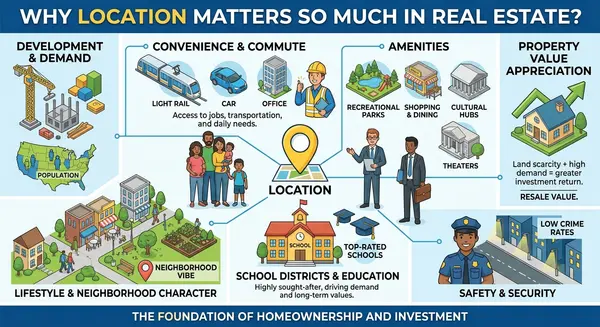
One of the strongest long-term housing trends could be the development of complete communities.
These are places where residents can access many daily needs without long journeys.
They may include:
-
Housing
-
Retail
-
Schools
-
Parks
-
Restaurants
-
Healthcare
-
Offices
-
Recreation
This approach could appeal to families, younger professionals, and older residents alike.
What This Means for Homebuyers
If you are planning to buy in 2027 or beyond, understanding migration trends can help you think about long-term demand.
Ask:
Are people moving into this area or away from it?
Are jobs being created?
Is housing being built fast enough?
Are infrastructure and services improving?
Are insurance and taxes becoming more expensive?
Does the community offer the lifestyle buyers increasingly want?
These questions can be more useful than simply asking whether a city is considered “hot.”
What This Means for Sellers
Sellers should understand what types of buyers are entering their market.
If a community is attracting young professionals, features such as home offices and convenient amenities may become more valuable.
If families are moving into the area, schools, bedrooms, outdoor space, and neighborhood amenities may receive greater attention.
If retirees are becoming a larger share of buyers, low-maintenance living and accessibility may become more important.
Understanding the buyer profile can help sellers position their properties more effectively.
What This Means for Investors
Investors should pay close attention to population and employment trends.
A growing population can create additional demand for:
-
Rental housing
-
Starter homes
-
Multifamily properties
-
Retail
-
Services
But population growth alone is not enough.
Investors should also evaluate supply.
If developers are adding thousands of homes, competition could increase.
The strongest investment opportunities may emerge in markets where population growth is strong but housing supply remains constrained.
A New Era of U.S. Housing Migration
The next decade could produce a more diversified American housing map.
Instead of one dominant migration pattern, several trends may occur simultaneously.
Some people will move toward lower-cost states.
Others will move closer to major employment centers.
Some will choose suburban communities.
Others will prefer walkable urban neighborhoods.
Some will prioritize climate.
Others will prioritize family.
And many will simply choose the location that gives them the best overall value.
This makes the future of real estate both challenging and exciting.
Final Thoughts
Where Americans choose to live will be one of the most important forces shaping U.S. real estate in 2027 and beyond.
Affordability will remain important, but it will not be the only factor.
Employment, lifestyle, transportation, schools, healthcare, infrastructure, insurance, climate considerations, and community amenities will all influence migration decisions.
The markets most likely to benefit may not necessarily be the cheapest places in America.
They may be the communities that successfully combine housing value with economic opportunity and quality of life.
For buyers, understanding migration can help identify markets with long-term potential.
For sellers, it can provide insight into changing buyer demand.
For investors, it can help identify where future housing needs may emerge.
At Onest Real Estate, we believe the future of U.S. real estate is increasingly about understanding movement—where people are going, why they are moving, and what they expect from the communities they call home.
As 2027 approaches and the housing market continues evolving, staying ahead of these migration trends could be one of the most valuable advantages for anyone planning to buy, sell, or invest in American real estate.
Categories
Recent Posts