Should You Buy a Home in 2026? Understanding Mortgage Rates, Affordability, and the Real Estate Market

The U.S. housing market in 2026 is giving buyers and sellers a very different experience from the frenzy seen during the pandemic years. Homes are still expensive, mortgage rates remain elevated, and affordability continues to influence almost every real estate decision. At the same time, inventory has improved in many markets, price growth has slowed, and buyers have more opportunities to negotiate than they did several years ago.
For many people, the biggest question is no longer simply, “Are home prices going up or down?”
Instead, the more important question is:
“Does buying a home make sense for me right now?”
That answer depends on much more than the direction of home prices. Mortgage rates, household income, local inventory, property taxes, insurance costs, job stability, and how long a buyer expects to own the property all play an important role.
As the second half of 2026 progresses, the housing market is increasingly becoming a market where strategy matters more than timing.
Mortgage Rates Remain One of the Biggest Challenges for Buyers
Mortgage rates continue to be one of the strongest forces affecting the U.S. housing market.
The average 30-year fixed mortgage rate has remained around the mid-6% range recently, keeping monthly payments substantially higher than they were when borrowing costs were near historic lows. Even small changes in mortgage rates can make a meaningful difference in how much a household can comfortably spend on a home.
For example, consider two buyers purchasing a $400,000 home with a 20% down payment.
At a 3% mortgage rate, the principal and interest payment would be dramatically lower than it would be at a rate around 6.5%. The difference can amount to hundreds of dollars each month and tens of thousands of dollars over the life of the loan.
This is why buyers should avoid looking only at the listing price.
A $400,000 home with a favorable mortgage rate may be easier to afford than a $375,000 home financed at a significantly higher rate.
Mortgage rates are also influenced by broader economic conditions, including inflation, Treasury yields, employment conditions, and expectations surrounding Federal Reserve policy. As a result, buyers should not assume that mortgage rates will automatically fall simply because the Federal Reserve changes its policy rate.
The path for borrowing costs remains uncertain, which means buyers should focus on what they can comfortably afford today rather than building an entire purchase strategy around a hoped-for future rate.
Affordability Is Improving, But It Is Still a Major Problem
Housing affordability has shown signs of improvement in 2026, but that does not mean homes have suddenly become affordable for everyone.
Affordability can improve when incomes rise, home-price growth slows, mortgage rates decline, or a combination of these factors occurs. However, the cost of owning a home includes much more than the mortgage payment.
Buyers also need to account for:
-
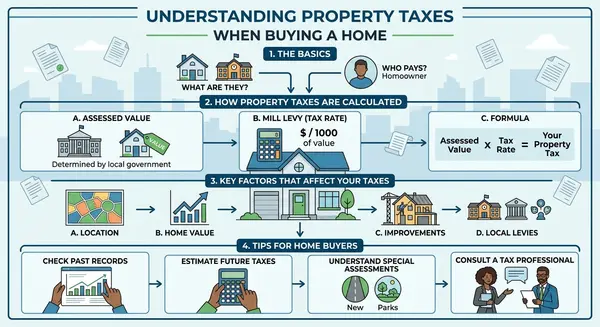
Property taxes
-
Homeowners insurance
-
Mortgage insurance
-
HOA fees
-
Utilities
-
Maintenance
-
Repairs
-
Closing costs
-
Landscaping
-
Emergency expenses
In some areas, insurance premiums have become an increasingly important part of the affordability equation. A property that looks affordable based on its mortgage payment alone may become significantly more expensive after taxes, insurance, and maintenance are included.
This is why determining a realistic monthly housing budget is more important than simply determining a maximum purchase price.
A responsible buyer should ask:
“What monthly payment can I comfortably maintain without sacrificing the rest of my financial goals?”
That question is often more useful than asking how expensive a home a lender is willing to approve.
Home Prices Are Not Moving in the Same Direction Everywhere
One of the biggest characteristics of the 2026 housing market is the growing difference between local markets.
The United States does not have one single housing market.
A buyer in Chicago may experience a very different market from a buyer in Austin. Someone shopping in Connecticut may face different conditions from someone searching in Phoenix or Seattle.
National home-price growth has become much more moderate, while certain Midwest and Northeast markets have continued to record stronger appreciation. Some areas with limited inventory and strong employment have maintained significant price pressure, while markets with larger inventories have become more favorable to buyers.
This means national headlines can sometimes be misleading.
A report saying that U.S. home prices increased does not necessarily mean every homeowner saw the same increase.
Likewise, a national slowdown does not automatically mean a particular neighborhood is declining.
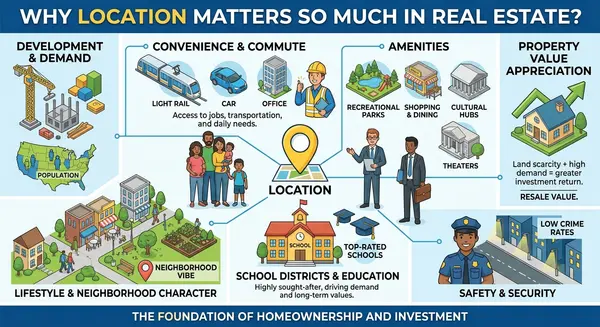
Local factors such as employment growth, population movement, new construction, housing supply, school districts, transportation, and household income can have a major effect on property values.
For buyers and sellers, the local market is usually more important than the national headline.
Inventory Is Giving Buyers More Breathing Room
Another important development in 2026 is the gradual improvement in housing inventory.
More homes are available for sale in many markets compared with the extremely limited supply seen during the pandemic-era housing boom.
That additional inventory can change the experience of buying a home.
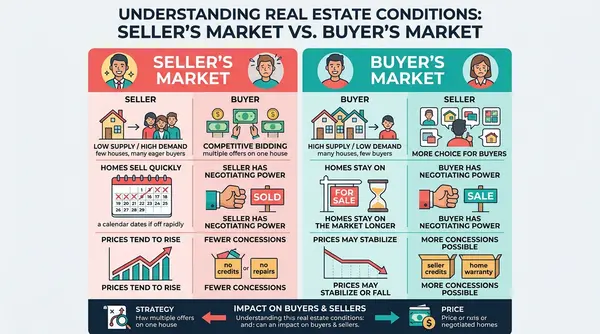
When buyers have only a handful of properties to choose from, sellers have more negotiating power. Buyers may feel pressure to make immediate offers, waive contingencies, or pay above asking price.
A healthier level of inventory can create a different environment.
Buyers may have more time to compare properties, negotiate repairs, request concessions, and think carefully before making an offer.
However, inventory is not increasing evenly across the country.
Some neighborhoods still have very limited supply, especially where homeowners are reluctant to sell because they currently have older mortgages with much lower interest rates.
This creates an unusual situation.
There may be more homes available nationally, while desirable properties in specific neighborhoods remain highly competitive.
The Lock-In Effect Is Still Influencing Sellers
One of the reasons inventory remains constrained in many parts of the country is the mortgage-rate lock-in effect.
Millions of homeowners purchased or refinanced homes when mortgage rates were substantially lower than today's rates.
Selling their current home and purchasing another property could mean giving up a very attractive mortgage and taking on a much higher monthly payment.
As a result, some homeowners choose to stay where they are even if they would otherwise consider moving.
This reduces the number of existing homes entering the market.
The result is a housing market that can simultaneously have affordability problems and limited supply.
For sellers who do decide to list, this can be beneficial if their property is located in a neighborhood where inventory remains tight.
But it does not mean every home will automatically attract multiple offers.
Today's buyers are generally more payment-conscious and selective.
Homes that are overpriced, poorly maintained, or lacking desirable features may spend considerably longer on the market.
Buyers Are Becoming More Selective
The psychology of today's buyer is different from the psychology of the pandemic-era buyer.
During the peak of the housing boom, buyers frequently faced intense competition and felt that waiting could mean losing the property permanently.
In 2026, many buyers are taking a more calculated approach.
They are asking questions such as:
-
Is the home fairly priced?
-
How long has it been on the market?
-
Has the seller reduced the price?
-
What are comparable homes selling for?
-
How much will insurance cost?
-
What repairs will be required?
-
Is the neighborhood appreciating?
-
Could I afford this payment if expenses increase?
-
What would happen if mortgage rates stay high for several years?
This shift can benefit well-prepared buyers.
Instead of competing solely on price, buyers may be able to negotiate through inspection requests, seller concessions, closing-cost assistance, rate buydowns, or flexible closing dates.
The strongest strategy is not necessarily finding the cheapest house.
It is finding a property where the total financial picture makes sense.
Should You Wait for Mortgage Rates to Fall?
This is perhaps the most common question buyers are asking.
There is no guaranteed answer.
Waiting for lower rates could eventually make financing cheaper. However, if mortgage rates fall significantly, more buyers could return to the market at the same time.
That could increase competition and potentially push home prices higher in desirable markets.
In other words, a lower mortgage rate does not automatically mean a cheaper home.
A buyer who waits for rates to decline could benefit from a lower borrowing cost but face higher purchase prices or stronger competition.
On the other hand, buying now does not necessarily mean being trapped at today's rate forever.
If a buyer purchases a home that fits their long-term needs and mortgage rates decline substantially in the future, refinancing may become an option, provided the financial circumstances make refinancing worthwhile.
Of course, refinancing is never guaranteed and comes with its own costs and considerations.
The better approach is to evaluate whether the home works financially at today's rates.
If it does, future rate changes can be treated as a potential opportunity rather than the foundation of the purchase decision.
New Construction Could Offer Interesting Opportunities
New construction is another area worth watching in 2026.
Builders are facing their own challenges, including elevated financing costs, labor expenses, material prices, and slower buyer demand.
However, new construction can sometimes provide opportunities that are less obvious in the traditional resale market.
Builders may offer incentives such as:
-
Mortgage-rate buydowns
-
Closing-cost assistance
-
Upgraded finishes
-
Appliance packages
-
Price reductions
-
Lot incentives
-
Flexible financing programs
These incentives can make a new home more competitive with an existing property.
However, buyers should still compare the complete cost.
A builder incentive may look attractive initially, but buyers should examine the purchase price, HOA costs, taxes, insurance, upgrade costs, and long-term resale potential before making a decision.
New construction also varies significantly by market.
Some regions are seeing stronger construction activity than others, particularly areas where land availability and population growth support continued development.
Regional Differences Will Become Even More Important
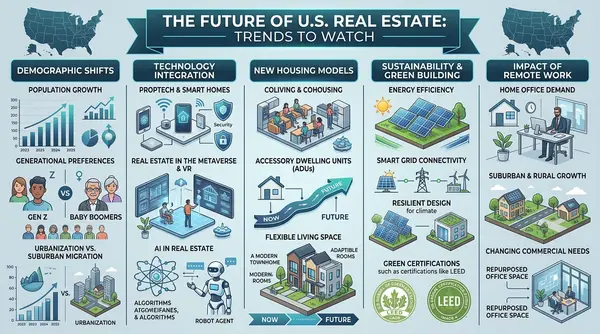
One of the most important trends for the remainder of 2026 may be the increasing importance of regional housing differences.
Markets in parts of the Midwest and Northeast have demonstrated stronger price performance because of relatively limited inventory and steady demand.
Meanwhile, some markets that experienced rapid growth during the pandemic have faced a more challenging adjustment.
Areas with substantial new construction can give buyers more choices, but additional supply can also limit how quickly prices rise.
This does not mean that entire states or regions should be labeled as “good” or “bad” markets.
Real estate is extremely local.
Within the same metropolitan area, one neighborhood can outperform another because of differences in schools, commute times, housing age, development, amenities, and available inventory.
For investors, buyers, and sellers alike, understanding the individual market is becoming increasingly important.
Rental Demand Could Remain Strong
The high cost of purchasing a home is also affecting the rental market.
Some households that would traditionally have transitioned from renting to owning are remaining renters for longer because the monthly cost of buying can be significantly higher than their current rent.
This can support rental demand in certain markets.
Single-family rental properties may particularly benefit in areas where families want more space but cannot yet justify the financial commitment of purchasing.
However, rental markets are also highly local.
Investors should carefully evaluate vacancy rates, rent growth, property taxes, insurance, maintenance costs, property management, and financing expenses before purchasing an investment property.
A property should not be considered a good investment simply because rents are increasing.
The complete cash-flow picture matters.
What Sellers Should Expect in the Current Market
Sellers in 2026 should adjust their expectations compared with the conditions of a few years ago.
Pricing a property correctly from the beginning is more important than ever.
A home that is priced significantly above comparable properties may receive little attention during its first few weeks on the market. Once a listing becomes stale, buyers may assume that something is wrong with the property or that the seller is becoming more desperate.
Presentation also matters.
Professional photography, appropriate staging, thoughtful repairs, strong online marketing, and accurate pricing can help a property stand out.
Sellers should also be prepared for negotiation.
Buyers may request repairs, closing-cost assistance, rate buydowns, or other concessions.
The strongest sellers will understand that the highest listing price is not always the same thing as the strongest overall offer.
What Buyers Should Do Before Making an Offer
Buyers can improve their position by preparing before they start seriously shopping.
First, understand your financing options.
Get pre-approved and determine your comfortable payment range rather than simply focusing on the maximum amount a lender will approve.
Second, research the local market.
Look at comparable sales, inventory levels, average days on market, price reductions, and neighborhood trends.
Third, understand the true cost of ownership.
A mortgage payment is only one part of the monthly expense.
Fourth, maintain financial flexibility.
Buying a home should not leave a household without emergency savings.
Finally, be patient.
A buyer does not have to purchase the first property that looks appealing.
The improved inventory environment in many markets gives buyers more room to evaluate their choices.
The 2026 Housing Market Is Becoming a Market of Negotiation
Perhaps the biggest change in the U.S. housing market is the gradual shift away from the extreme seller dominance experienced earlier in the decade.
This does not mean the market has become a buyer's market everywhere.
Instead, it is becoming more balanced and increasingly dependent on local conditions.
Buyers have more opportunities in markets where inventory is growing faster than demand.
Sellers retain significant leverage in areas where desirable homes remain scarce.
This creates a more nuanced housing market.
There is no single national rule that applies to every buyer or seller.
What Could Happen Next?
The remainder of 2026 will likely depend heavily on mortgage rates, inflation, employment, consumer confidence, and housing supply.
If mortgage rates remain elevated, buyer demand may continue to be restrained.
If rates decline meaningfully, more buyers could return to the market, potentially increasing transaction activity.
If inventory continues to rise faster than demand, price growth could remain modest.
At the same time, markets with limited supply and strong local economies could continue to outperform the national average.
A major nationwide housing crash is not the only possible outcome of slower sales.
The market can also experience a long period of low transaction volume, modest price appreciation, and significant differences between regions.
That scenario may actually be more consistent with the current environment.
Final Thoughts
The U.S. real estate market in 2026 is not simply a story about rising prices or falling sales.
It is a story about affordability, mortgage rates, inventory, regional differences, and changing buyer behavior.
For buyers, the environment may provide more negotiating power and more choices than were available during the most competitive years of the housing boom. But affordability remains a serious consideration, and purchasing a home should be based on long-term financial stability rather than expectations about what mortgage rates or home prices might do next year.
For sellers, strong pricing, presentation, preparation, and realistic expectations are becoming increasingly important.
And for investors, local market fundamentals matter more than broad national headlines.
The biggest opportunity in today's market may not come from perfectly predicting where prices or mortgage rates are headed.
It may come from understanding your local market well enough to recognize when the right property, price, and financing structure come together.
In 2026, successful real estate decisions are becoming less about trying to time the market—and more about making informed decisions within it.
Categories
Recent Posts