Mortgage Rates and the U.S. Housing Market: What Buyers Should Expect in 2026 and 2027

Mortgage rates remain one of the most important factors influencing the U.S. housing market.
They affect how much buyers can afford, how much sellers can realistically ask, how many homeowners are willing to move and how quickly the overall housing market changes.
In recent years, Americans have experienced a dramatic shift in borrowing costs. After the unusually low mortgage rates of the early 2020s, rates moved substantially higher, changing the economics of buying a home.
Now, as the market moves through 2026, buyers and sellers are watching closely for what happens next.
Will mortgage rates fall?
Will home prices follow?
Will more homeowners finally decide to sell?
Could lower rates trigger another wave of competition?
There are no guaranteed answers, but understanding the relationship between mortgage rates and housing can help buyers and sellers make more informed decisions.
Why Mortgage Rates Matter So Much
A mortgage is usually one of the largest financial commitments a household makes.
Even a relatively small change in the interest rate can significantly affect the total amount paid over the life of a loan.
More importantly for today's buyers, it affects the monthly payment.
For example, a buyer purchasing the same home at two different interest rates could face very different monthly costs.
That means mortgage rates directly influence purchasing power.
When rates rise, buyers generally qualify for smaller loans.
When rates fall, buyers can often afford more at the same monthly payment.
The Housing Market Is Not Controlled by Rates Alone
Mortgage rates are important, but they are only one part of the housing equation.
Home prices, inventory, wages, taxes, insurance and local economic conditions also matter.
A decline in mortgage rates does not automatically make homes affordable.
If lower rates bring a large wave of buyers into the market while inventory remains limited, competition could increase.
That could put upward pressure on home prices.
In other words, lower rates can help affordability while simultaneously increasing demand.
Why Buyers Are Waiting for Lower Rates
Many prospective buyers have delayed purchasing because current mortgage payments feel too expensive.
Some are hoping rates will decline before they commit.
Others are waiting because they expect more inventory to become available.
But waiting carries its own uncertainty.
If rates fall significantly, many other buyers may return to the market at the same time.
That could increase competition for desirable properties.
The Risk of Waiting for the "Perfect" Rate
One of the most common mistakes buyers can make is assuming they can perfectly time mortgage rates.
Nobody knows exactly when rates will reach their lowest point.
A buyer could wait for a lower rate only to discover that home prices have increased or inventory has become more competitive.
The better question is often:
Can I comfortably afford this home today?
If the answer is yes and the property fits your long-term needs, the decision may be more important than trying to predict the exact future path of rates.
Refinancing Can Change the Equation
Buying a home today does not necessarily mean being stuck with today's mortgage rate forever.
If rates decline substantially in the future, homeowners may have an opportunity to refinance, depending on their financial circumstances and market conditions.
Refinancing is not guaranteed to be beneficial.
There may be closing costs, fees and other considerations.
But the possibility can provide flexibility for some homeowners.
Lower Rates Could Bring More Sellers Into the Market
Mortgage rates affect sellers too.
Many homeowners currently hold mortgages with rates far below today's levels.
Selling would mean giving up that low-rate loan and potentially taking on a more expensive mortgage for their next home.
This has discouraged some homeowners from moving.
If mortgage rates decline, the financial gap between their existing loan and a new mortgage could become smaller.
That could encourage more homeowners to list their properties.
The Mortgage Lock-In Effect Could Weaken
The mortgage lock-in effect has contributed to limited existing-home inventory.
But it cannot prevent homeowners from moving forever.
People still relocate for jobs.
Families grow.
Retirement changes housing needs.
Divorce, inheritance and other life events also create reasons to sell.
As the market evolves, more homeowners may become willing to make the financial trade-off involved in moving.
More Listings Could Help Buyers
If lower mortgage rates encourage more homeowners to sell, buyers could benefit from increased inventory.
More listings can mean:
-
Greater choice
-
Less competition
-
More negotiation
-
More opportunities to compare homes
However, this depends on how much inventory enters the market relative to buyer demand.
What Happens If Rates Fall Quickly?
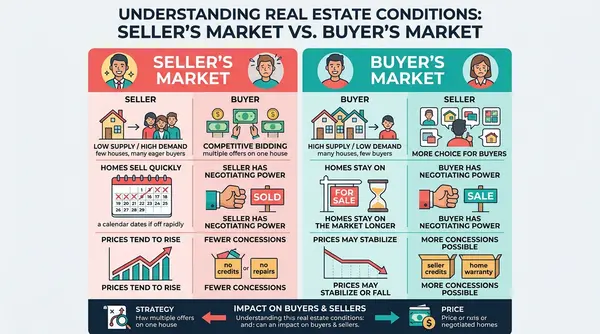
A sharp decline in mortgage rates could produce a significant increase in buyer activity.
Millions of potential buyers who have been waiting could re-enter the market.
That could create a new wave of competition.
If inventory does not increase at the same pace, sellers could regain significant leverage.
This is why a falling-rate environment does not necessarily mean falling home prices.
What Happens If Rates Stay High?
If rates remain elevated for an extended period, buyers may continue adapting.
They may:
-
Purchase smaller homes
-
Choose less expensive markets
-
Make larger down payments
-
Consider adjustable financing where appropriate
-
Negotiate more aggressively
-
Delay purchasing
Builders may also respond by focusing on smaller homes and offering incentives.
Builders Are Already Part of the Affordability Equation
New construction can play an important role when existing inventory is limited.
Builders have several ways to attract buyers.
They may offer:
-
Closing-cost assistance
-
Temporary rate reductions
-
Upgraded features
-
Appliance packages
-
Other incentives
These offers can effectively reduce the cost of purchasing a new home.
But buyers should compare the complete financial package rather than focusing on one incentive.
The Difference Between Price and Payment
A home priced at $500,000 does not have one universal monthly cost.
The payment depends on:
-
Interest rate
-
Down payment
-
Loan type
-
Property taxes
-
Insurance
-
HOA fees
This is why buyers should avoid focusing solely on the listing price.
A lower-priced home may have higher taxes or insurance.
A more expensive property may have a lower overall monthly cost depending on the circumstances.
Down Payments Matter
A larger down payment can reduce the amount borrowed.
That can lower monthly principal and interest payments.
But putting every available dollar into the down payment is not always the best decision.
Homeowners also need money for:
-
Emergency expenses
-
Repairs
-
Moving
-
Furnishing
-
Maintenance
Keeping adequate cash reserves is an important part of responsible homeownership.
Buyers Should Know Their Full Housing Cost
Before purchasing, buyers should estimate more than the mortgage payment.
The complete monthly housing budget may include:
-
Principal
-
Interest
-
Property taxes
-
Insurance
-
HOA fees
-
Utilities
-
Maintenance
Understanding the total cost can prevent unpleasant surprises after closing.
Insurance Is Becoming More Important
Homeowners insurance costs vary significantly by location.
In areas exposed to hurricanes, wildfires, flooding or other risks, insurance can be a substantial part of the overall housing budget.
A buyer should obtain realistic insurance estimates before committing to a property.
The mortgage rate alone does not determine affordability.
Property Taxes Can Change the Calculation
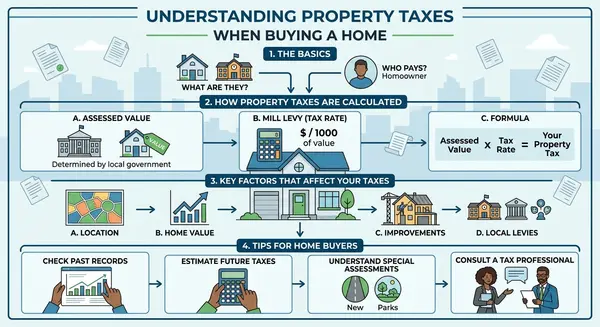
Property taxes also vary from one community to another.
Two homes with similar prices may have very different monthly costs.
Buyers should review the property's current tax situation and understand how taxes may change after purchase.
HOA Fees Can Matter
Condominiums, townhomes and some single-family communities may have homeowners association fees.
These fees can cover services and amenities, but they increase the monthly cost of ownership.
Buyers should review:
-
Current HOA fees
-
Rules
-
Reserve funds
-
Planned assessments
-
Association financial health
A lower purchase price does not necessarily mean a lower overall cost.
Mortgage Rates and Home Prices Have a Complicated Relationship
It is tempting to assume that high mortgage rates automatically cause home prices to fall.
In reality, the relationship is more complicated.
Higher rates can reduce buyer purchasing power.
But they can also discourage existing homeowners from selling.
That reduces inventory.
When supply remains limited, prices can stay surprisingly resilient even when affordability is poor.
Why Home Prices Have Not Fallen Everywhere
The shortage of available homes remains an important factor.
Even if fewer buyers can afford current prices, there may still not be enough sellers willing to list.
This creates a situation where demand is weaker but supply is also restricted.
That can result in slower price growth rather than a dramatic national decline.
Local Markets Can Behave Very Differently
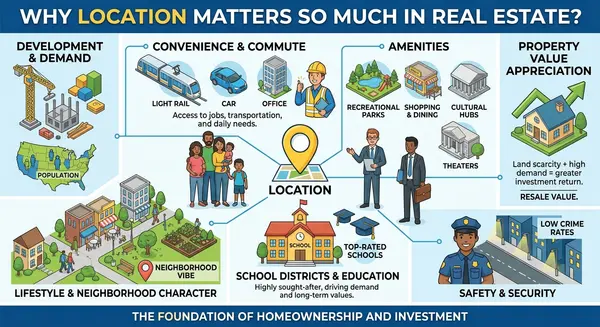
Mortgage rates are national.
Housing markets are local.
A rate change affects buyers across the country, but local supply and demand determine what happens to individual properties.
A city with strong employment and limited inventory may remain competitive.
Another market with substantial construction and slower population growth may become much more buyer-friendly.
The 2026 Housing Market May Remain Uneven
The housing market is unlikely to move in one uniform direction.
Some markets may see:
-
Increasing inventory
-
Slower price growth
-
More negotiation
Others may experience:
-
Strong demand
-
Limited inventory
-
Competitive bidding
Buyers and sellers should therefore avoid assuming that national headlines describe their local market.
What Lower Rates Could Mean for First-Time Buyers
First-time buyers are particularly sensitive to mortgage rates because they usually do not have equity from a previous home.
Lower rates could improve their purchasing power.
But if rates fall sharply and competition increases, home prices could also rise.
This means the benefit of lower rates depends on both financing costs and property prices.
What Lower Rates Could Mean for Move-Up Buyers
Move-up buyers have a unique advantage and challenge.
They are both sellers and buyers.
A lower mortgage rate could make the purchase side more affordable.
But increased buyer demand could also strengthen the market for the home they are selling.
This can create a more active housing market overall.
What Lower Rates Could Mean for Investors
Real estate investors pay close attention to borrowing costs.
Lower rates can improve the economics of financed properties.
But investors still need to consider:
-
Rental income
-
Vacancy
-
Maintenance
-
Taxes
-
Insurance
-
Property management
-
Purchase price
A lower mortgage rate does not automatically make a property a good investment.
The numbers still need to work.
The Role of Credit Scores
Mortgage rates offered to individual borrowers can depend on several factors.
Credit history is one of them.
A stronger credit profile can potentially provide access to better loan terms.
Buyers planning to purchase should review their credit well before applying for a mortgage.
Preparing Before Rates Move
Buyers do not need to wait for rates to change before preparing.
They can:
-
Review their credit.
-
Build savings.
-
Reduce unnecessary debt.
-
Determine a comfortable monthly payment.
-
Get familiar with mortgage options.
-
Research target neighborhoods.
-
Track local listings.
Preparation creates flexibility.
Sellers Should Watch Mortgage Rates Too
Sellers sometimes focus only on home prices.
But mortgage rates influence the number of potential buyers who can afford their property.
If rates rise, the pool of qualified buyers may shrink.
If rates decline, demand may increase.
Understanding this relationship can help sellers choose the right timing and pricing strategy.
Pricing Becomes Even More Important When Rates Are High
When financing is expensive, buyers become more sensitive to price.
A home that might have sold quickly during a low-rate environment may require a more competitive price today.
Sellers should therefore consider the buyer's monthly payment—not just the headline price.
Negotiation Could Become More Common
As buyers become more payment-conscious, negotiation can become increasingly important.
Buyers may negotiate for:
-
Lower purchase prices
-
Closing-cost assistance
-
Repairs
-
Rate buydowns
-
Other concessions
The strongest negotiating strategy depends on the local market and the individual property.
Rate Buydowns Can Affect Affordability
Some sellers and builders offer temporary mortgage-rate buydowns.
These arrangements can reduce the buyer's initial interest rate for a defined period.
They may make a home more affordable at the beginning of the loan.
However, buyers should understand what happens when the temporary period ends.
The long-term payment should still be affordable.
Adjustable-Rate Mortgages Require Careful Planning
Some buyers may consider adjustable-rate mortgages when fixed rates are high.
These loans can offer different initial terms and may be appropriate for certain financial situations.
However, the future rate can change according to the loan's terms.
Buyers should understand the adjustment structure, caps and potential payment changes before choosing this type of financing.
The Importance of Professional Guidance
Mortgage decisions are highly individual.
The right loan depends on the buyer's income, credit, savings, expected length of ownership and financial goals.
Real estate professionals and qualified lending professionals can help buyers understand their options.
The goal should not simply be obtaining the largest loan possible.
It should be creating a sustainable path to homeownership.
Looking Toward 2027
The housing market's direction in 2027 will depend on several forces.
Mortgage rates will remain important.
But so will:
-
Housing inventory
-
Home prices
-
Wage growth
-
Employment
-
Construction
-
Insurance costs
-
Consumer confidence
If borrowing costs become more manageable while inventory improves, the market could move toward greater balance.
If rates decline rapidly while inventory remains limited, competition could increase.
If rates remain high, affordability pressures could continue.
The Most Important Question for Buyers
Instead of asking:
"When will mortgage rates be lowest?"
consider asking:
"What monthly payment can I comfortably manage?"
That question is more useful because it focuses on your actual financial situation.
A slightly higher rate on an affordable home may be manageable.
A low rate on an overpriced property may still create financial stress.
The Most Important Question for Sellers
Sellers should ask:
"What price and strategy will attract today's buyers?"
Today's buyers are highly aware of monthly payments.
They are comparing properties carefully.
They are looking at taxes, insurance and HOA fees.
And many are unwilling to stretch beyond their budgets.
Pricing realistically can therefore be more effective than simply waiting for the market to return to previous conditions.
Mortgage Rates Will Not Tell the Entire Story
The future of U.S. housing cannot be reduced to one number.
Rates matter.
But inventory matters.
Affordability matters.
Employment matters.
Construction matters.
Local demand matters.
The interaction between these factors will determine what the market looks like in 2026 and 2027.
Final Outlook
The U.S. housing market is entering another important period of adjustment.
Mortgage rates remain a major consideration for buyers and sellers, but the market is gradually adapting.
Buyers are becoming more payment-conscious.
Sellers are paying greater attention to pricing.
Builders are using incentives to attract buyers.
Homeowners are reconsidering whether to stay locked into older mortgages.
And inventory is gradually changing in many communities.
The next phase of the housing market may therefore be less about dramatic swings and more about gradual normalization.
Final Thoughts
Mortgage rates will continue to influence American housing, but they should not be treated as the only factor determining whether now is the right time to buy or sell.
For buyers, financial readiness should come first.
For sellers, realistic pricing and strong preparation remain essential.
And for both, understanding the local market is more valuable than trying to predict every movement in national interest rates.
At Onest Real Estate, we believe successful real estate decisions come from looking at the complete financial picture—not just the mortgage rate advertised today.
Whether rates rise, fall or remain relatively stable, the strongest strategy is to understand your options, know your numbers and make a decision that supports your long-term goals.
Categories
Recent Posts