Is the U.S. Housing Market Becoming a Buyer’s Market in 2026?

For several years, the U.S. housing market has been challenging for buyers.
Limited inventory, intense competition and rapidly rising prices made it difficult for many people to find a home they could afford. Buyers often had to move quickly, compete against multiple offers and make compromises simply to secure a property.
In 2026, however, the market is showing signs of a different direction.
More homes are available in many parts of the country. Properties are taking longer to sell in some markets. Price reductions are becoming more noticeable, and buyers have more opportunities to negotiate than they did during the most competitive years of the housing boom.
But does that mean America has officially entered a buyer's market?
The answer is more complicated.
The U.S. housing market is not moving in one direction everywhere. Some cities and neighborhoods are becoming more favorable to buyers, while others remain highly competitive.
Understanding this shift is important for anyone planning to buy or sell a home during the remainder of 2026 and into 2027.
What Is a Buyer's Market?
A buyer's market occurs when the supply of homes available for sale exceeds the level of demand from buyers.
In a buyer-friendly environment, sellers may have to compete more aggressively for attention.
That can result in:
-
Longer time on the market
-
More price reductions
-
Greater negotiation
-
Seller concessions
-
More choices for buyers
-
Less pressure to make an immediate offer
A seller's market is the opposite.
When demand exceeds supply, buyers compete for limited properties.
That can lead to bidding wars, faster sales and rising prices.
The current U.S. housing market sits somewhere between these extremes, with conditions varying substantially by location.
The Market Is Becoming More Balanced
One of the biggest changes in 2026 is the gradual movement toward balance.
Buyers are still facing high home prices and mortgage rates, but they generally have more information and, in many areas, more choices.
That changes the psychology of the market.
A buyer may no longer feel that they have to purchase the first acceptable home they see.
Instead, they can compare properties and negotiate based on condition, price and location.
For many buyers, that represents a significant improvement.
Inventory Is the Key Indicator
Housing inventory is one of the best ways to determine whether a market is becoming more buyer-friendly.
When inventory increases, buyers have more options.
When inventory falls, sellers gain leverage.
Throughout 2026, inventory has improved in many markets compared with the extremely limited levels seen earlier in the decade.
But the improvement is uneven.
Some areas still have very few homes available.
Others have experienced a much larger increase.
This is why buyers should pay attention to their local market instead of relying solely on national statistics.
Why More Homeowners Are Listing
Several factors can encourage homeowners to sell.
Life changes remain one of the biggest reasons.
People move because of:
-
New jobs
-
Retirement
-
Marriage
-
Divorce
-
Growing families
-
Downsizing
-
Relocation
-
Financial changes
The mortgage rate environment also plays a role.
Some homeowners who have been reluctant to sell may eventually decide that their personal circumstances are more important than keeping a low-rate mortgage.
As more homeowners list properties, inventory can gradually improve.
The Mortgage Lock-In Effect Is Still Important
Despite improving inventory, the mortgage lock-in effect continues to influence the market.
Millions of homeowners have mortgages with rates significantly below today's levels.
Selling means giving up that financing and potentially taking on a much more expensive mortgage.
For some homeowners, that makes moving financially unattractive.
This is one reason inventory remains below what many buyers would consider a normal level.
Why Buyers Are Becoming More Selective
Higher borrowing costs have changed buyer behavior.
When monthly payments are expensive, buyers become more careful about the price they are willing to pay.
They may take longer to decide.
They may negotiate more.
They may reject homes that need significant repairs.
They may choose smaller properties.
They may also move farther from expensive areas.
This increased selectivity is forcing sellers to pay closer attention to value.
Price Reductions Are Sending a Message
When sellers repeatedly reduce asking prices, it can indicate that the original listing price did not match buyer demand.
This does not necessarily mean the housing market is collapsing.
It can simply mean that sellers need to adjust expectations.
In a balanced market, buyers and sellers have to meet somewhere in the middle.
The days of assuming that every home will receive multiple offers at a premium price are no longer universal.
Sellers Still Have Leverage in Many Markets
It would be a mistake to describe the entire U.S. market as a buyer's market.
Some communities remain extremely competitive.
Properties that are:
-
Well located
-
Properly priced
-
Updated
-
Move-in ready
-
Attractive to a broad range of buyers
can still sell quickly.
Limited inventory in desirable neighborhoods can give sellers substantial leverage.
This creates an important distinction:
A slower national market does not mean every home is difficult to sell.
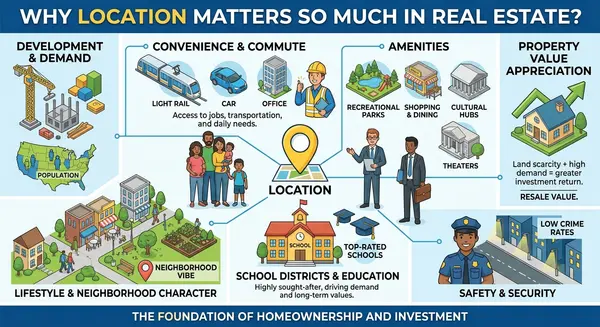
Location Is Becoming More Important
As the market becomes more balanced, buyers have more opportunities to compare properties.
That makes location even more important.
A home near:
-
Employment centers
-
Good schools
-
Transportation
-
Parks
-
Shopping
-
Restaurants
-
Healthcare
may attract stronger demand than a similar property in a less convenient location.
Buyers increasingly have the ability to choose.
Condition Matters More Than It Used To
During highly competitive periods, buyers sometimes purchased homes despite significant repair needs.
In today's environment, buyers may be less willing to do that.
A home requiring a new roof, HVAC system, flooring and kitchen renovation can face greater competition from properties that are move-in ready.
Sellers may need to address obvious issues before listing.
That does not mean every home needs a complete renovation.
It means sellers should understand how buyers will perceive the property's condition.
Sellers May Need to Offer Concessions
Another sign of a more balanced market is the increased use of seller concessions.
Depending on the transaction and applicable loan rules, sellers may contribute toward certain buyer costs.
Examples can include:
-
Closing costs
-
Rate buydown expenses
-
Repairs
-
Other negotiated transaction costs
These concessions can make a property more attractive without requiring the seller to make a large headline price reduction.
Buyers Have More Time to Think
One of the most significant psychological changes is time.
In a highly competitive market, buyers may feel pressure to make an offer immediately.
In a more balanced market, buyers may have more time to:
-
Compare properties
-
Review disclosures
-
Arrange inspections
-
Evaluate financing
-
Negotiate
-
Think about long-term suitability
That can lead to better purchasing decisions.
But Buyers Should Not Become Overconfident
More negotiating power does not mean buyers should assume every seller will accept a dramatically lower offer.
A home may already be priced competitively.
Another buyer may still be interested.
And desirable properties can attract multiple offers even in a slower market.
Negotiation should be based on evidence.
Recent comparable sales, property condition and local market conditions should guide the offer.
Mortgage Rates Continue to Limit Affordability
Even with better inventory, mortgage rates remain a major challenge.
A buyer may find a home at a reasonable price but still struggle with the monthly payment.
This means the market can become more buyer-friendly without necessarily becoming truly affordable.
For affordability to improve significantly, one or more of the following would need to change:
-
Home prices
-
Mortgage rates
-
Household incomes
-
Down-payment requirements
-
Property taxes
-
Insurance costs
The relationship between all these factors matters.
What If Mortgage Rates Fall?
A meaningful decline in mortgage rates could change the market quickly.
Buyers who have been waiting could return.
Some homeowners may refinance.
Others may decide to sell because the difference between their current mortgage and a new mortgage becomes less painful.
Lower rates could therefore increase both demand and supply.
The effect on prices would depend on which side grows faster.
Lower Rates Could Help Sellers Too
Sellers often welcome lower mortgage rates because more buyers can qualify for larger loans.
That can increase demand.
However, sellers should not assume that every rate decline will immediately produce a bidding war.
Local inventory still matters.
If many homes are available, buyers may continue negotiating.
Could 2026 Become a Strong Year for Buyers?
For certain markets, yes.
Buyers who have been waiting for more negotiating power may find opportunities in 2026.
They may encounter:
-
More listings
-
More price reductions
-
Longer market times
-
Less competition
-
Greater seller flexibility
But the best opportunities will still depend on location and property type.
What Could Happen in 2027?
The direction of the market will depend heavily on mortgage rates, inventory and economic conditions.
If rates decline gradually, demand could increase.
If inventory continues improving at the same time, the market could remain relatively balanced.
If rates fall sharply while inventory remains limited, competition could increase substantially.
If economic conditions weaken, demand could decline and buyer leverage could strengthen.
Several outcomes remain possible.
What This Means for First-Time Buyers
First-time buyers may benefit from the shift toward greater balance.
They can potentially take more time to compare homes.
They may also have greater opportunities to negotiate.
However, affordability remains the primary challenge.
First-time buyers should focus on what they can comfortably afford rather than simply maximizing the amount a lender is willing to approve.
A mortgage payment is only one part of the housing budget.
Property taxes, insurance, utilities, maintenance and unexpected repairs also matter.
What This Means for Move-Up Buyers
Move-up buyers have another consideration: their existing home.
If you are selling one property and buying another, the market affects both sides of your transaction.
A buyer-friendly market may make your next purchase easier.
But if your existing home takes longer to sell, you need to plan accordingly.
Understanding the local market for both properties is essential.
What This Means for Sellers
Sellers should not panic simply because the market is becoming more balanced.
Instead, they should become more strategic.
A successful sale may require:
-
Accurate pricing
-
Strong photography
-
Effective marketing
-
Proper preparation
-
Reasonable flexibility
-
Willingness to negotiate
The goal is not necessarily to sell for the highest imaginable price.
The goal is to position the property competitively enough to attract serious buyers.
The Importance of Pricing Correctly
Pricing has always mattered, but it becomes especially important when buyers have alternatives.
If a home is overpriced, buyers can simply move on to another listing.
A property that sits on the market for an extended period may eventually develop a negative perception.
Sellers should therefore base their pricing strategy on current comparable sales and competition.
New Construction Adds Another Layer of Competition
Existing-home sellers are also competing with builders.
New construction can offer:
-
Modern layouts
-
New appliances
-
Energy-efficient systems
-
Builder warranties
-
Incentives
If builders offer attractive financing or closing-cost incentives, existing-home sellers may need to emphasize their property's unique advantages.
That could include location, mature landscaping, larger lots or established neighborhood amenities.
Investors Are Watching the Market Closely
Real estate investors are also adapting.
Higher financing costs can reduce investment returns.
At the same time, more inventory can create opportunities to negotiate.
Investors may focus more heavily on properties that generate strong rental income relative to purchase price.
The days of relying primarily on rapid appreciation are becoming less attractive.
Cash flow and fundamentals matter more.
Is This a Good Time to Buy?
There is no single answer.
Buying can make sense if:
-
You have stable income
-
Your finances are healthy
-
You can afford the monthly payment
-
You plan to stay for several years
-
You find a property that fits your needs
-
The price is supported by comparable sales
Waiting may make sense if:
-
The payment would stretch your budget
-
You need more savings
-
Your employment situation is uncertain
-
You are carrying significant debt
-
You have not found the right property
Market timing should come after financial readiness.
Is This a Good Time to Sell?
Selling may make sense if you have a strong reason to move and your property is positioned correctly.
You should consider:
-
Local inventory
-
Recent comparable sales
-
Buyer demand
-
Property condition
-
Your desired timeline
A seller who needs to move quickly may need a different strategy from someone who can wait several months.
What Buyers Should Watch for the Rest of 2026
If you are planning to buy, monitor these indicators:
Inventory: Are more homes entering the market?
Days on market: Are homes taking longer to sell?
Price reductions: Are sellers adjusting asking prices?
Mortgage rates: Is affordability improving or deteriorating?
New construction: Are builders adding supply?
Local employment: Is the area's economy growing or weakening?
Pending sales: Are buyers becoming more active?
These indicators provide a much clearer picture than headlines alone.
What Sellers Should Watch
Sellers should monitor:
-
Competing listings
-
Recent closed sales
-
Average days on market
-
Buyer activity
-
Price reductions
-
Mortgage rates
-
New construction
Your home's value is determined by what buyers are willing to pay—not simply by what another seller is asking.
The Housing Market May Become More Negotiation-Driven
One of the biggest changes ahead could be the return of negotiation as a central part of real estate.
Instead of focusing only on purchase price, buyers and sellers may negotiate:
-
Closing costs
-
Repairs
-
Closing dates
-
Financing incentives
-
Inspection terms
-
Appliances
-
Other transaction details
This can create more flexibility for both sides.
A Balanced Market Can Be Healthy
A market where buyers and sellers both have reasonable negotiating power can be healthier than an extreme market.
Buyers are less likely to make rushed decisions.
Sellers receive serious offers.
Prices are more closely connected to market fundamentals.
And transactions can be based on value rather than fear of missing out.
That does not mean the market becomes easy.
It means the market becomes more rational.
Final Outlook
The U.S. housing market in 2026 is gradually becoming more balanced, but calling the entire country a buyer's market would be misleading.
Some markets are clearly shifting toward buyers.
Others remain competitive.
And many communities fall somewhere in the middle.
Inventory will remain one of the most important factors to watch.
Mortgage rates will influence affordability.
New construction will add competition.
Economic conditions will determine how confident buyers and sellers feel.
And local supply and demand will ultimately determine what happens to individual properties.
Final Thoughts
The biggest opportunity in today's housing market may be that buyers no longer have to approach every property with the same urgency seen during the most competitive years.
There is more room to research.
More room to compare.
And in many markets, more room to negotiate.
For sellers, this does not mean the market is working against you.
It simply means preparation and strategy matter more.
Whether you are buying your first home, moving into your next one, selling an existing property or exploring real estate as an investment, understanding the balance between supply and demand can help you make better decisions.
At Onest Real Estate, we believe real estate decisions should be based on local market conditions, financial reality and long-term goals—not fear, pressure or headlines.
The market may be changing, but opportunity exists on both sides of the transaction for people who know how to recognize it.
Categories
Recent Posts