Seller's Market vs. Buyer's Market: Understanding Real Estate Conditions
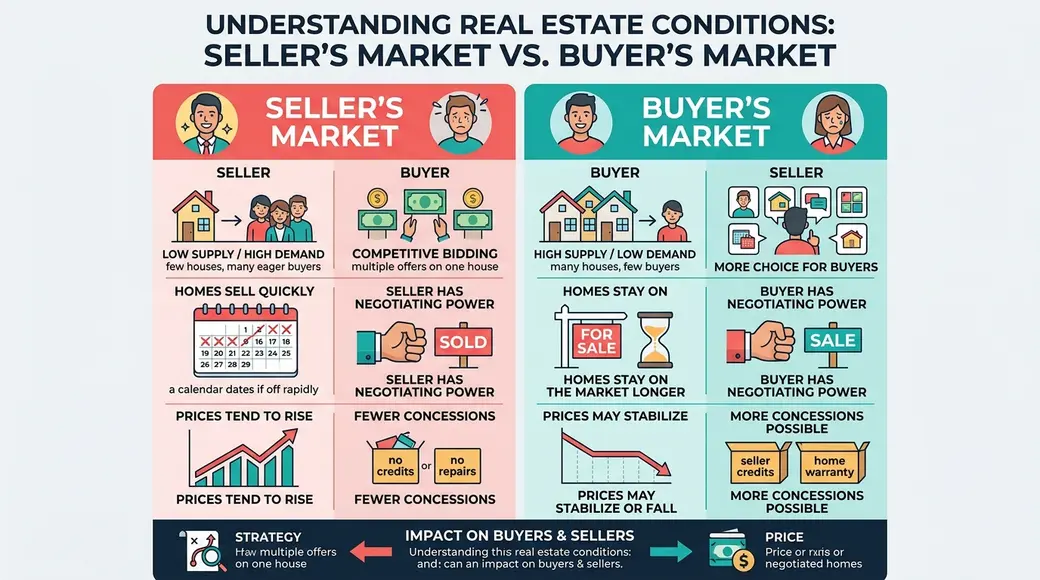
Real estate markets can change over time based on the relationship between housing supply and buyer demand. Two common terms used to describe market conditions are "seller's market" and "buyer's market."
What Is a Seller's Market?
A seller's market generally describes conditions where buyer demand is strong compared with the available supply of homes.
In such conditions, sellers may receive significant interest in well-priced properties.
What Is a Buyer's Market?
A buyer's market generally describes conditions where buyers have more available choices relative to demand.
Depending on the market, buyers may have more opportunities to negotiate price or contract terms.
Balanced Markets
Some markets have a relatively balanced relationship between supply and demand. In these conditions, neither buyers nor sellers necessarily have a major market-wide advantage.
Local Conditions Matter
Market conditions can vary dramatically between cities, neighborhoods, and property types.
A national housing headline may not accurately describe what is happening in a particular neighborhood.
What Should Buyers and Sellers Watch?
Important indicators include inventory, new listings, pending sales, closed sales, median sale prices, days on market, price reductions, and local buyer activity.
Final Thoughts
Understanding market conditions can help buyers and sellers set realistic expectations.
The most useful market information is usually local, recent, and specific to the type of property being considered.
Categories
Recent Posts